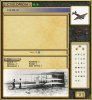

The Fiat BR.20 was a low-wing twin-engine medium bomber that was developed and manufactured by Italian aircraft company Fiat. It holds the distinction of being the first all-metal Italian bomber to enter service; at the time, it was regarded as one of the most modern medium bombers in the world.
The BR.20 has its origins in a request by the Regia Aeronautica issued during 1934 for a new medium bomber capable of high speeds, long range, and satisfactory payload, reliability, and flight characteristics compared to contemporaries. Among the companies that chose to respond was Fiat, which completed its design for the competition during 1935. On 10 February 1936, the first prototype (serial number M.M.274) conducted its maiden flight. Flight testing proceeded at a rapid pace; during September 1936, initial deliveries of the type commenced to the Regia Aeronautica.
The file contains the unit and pcx files. Model is not my own creation. Wyrmshadow helped with the animation files. I merely put the pieces together and cleaned up the model for CivIII and added some what if pieces. A big thanks to everyone that helped out!
The BR.20 has its origins in a request by the Regia Aeronautica issued during 1934 for a new medium bomber capable of high speeds, long range, and satisfactory payload, reliability, and flight characteristics compared to contemporaries. Among the companies that chose to respond was Fiat, which completed its design for the competition during 1935. On 10 February 1936, the first prototype (serial number M.M.274) conducted its maiden flight. Flight testing proceeded at a rapid pace; during September 1936, initial deliveries of the type commenced to the Regia Aeronautica.
The file contains the unit and pcx files. Model is not my own creation. Wyrmshadow helped with the animation files. I merely put the pieces together and cleaned up the model for CivIII and added some what if pieces. A big thanks to everyone that helped out!