Lords of the Rising Sun

A waka, by an unnamed retainer of Asai Nagamasa, composed upon seeing the departure of a company of soldiers.

暖かき 道の煙は 空隠し 遠くへと見ば 近くぞなるを
atatakaki / michi no kemuri wa / sora kakushi / towoku weto miba / chikaku zo naru wo
the warm dust from the road hides the sky - if you look far away, it becomes close!
 
1560
Heaven is not Earth


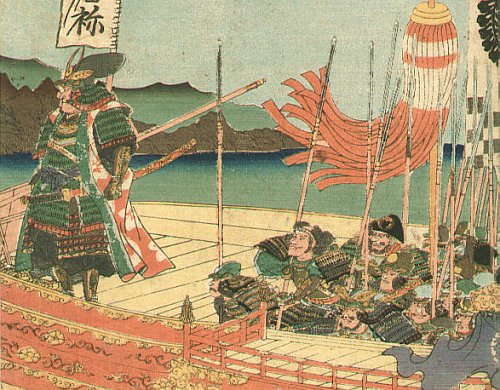
samurai-pictures8.jpg


Heaven's forest leaves
Spy less in the fortuned spring -
Heaven is not Earth

MILITARY AFFAIRS

Run. Lift your legs, but do not crack leaves or put prints in the soil. Collect information. Do not climb trees or hide behind stones. Only listen carefully.

Kanto

The Siege of Edo

SPRING - Chiyoda Castle of Edo has stood for more than one hundred years. While the castle is quite small (OOC: at this point in time), its defenses are formidable and it lies on an important crossroads. For the Hojo, though, this crossroads is quite minor compared to the major highway running through Odawara. Nonetheless, much is invested in this domain. And now that domain is occupied by the treacherous Satomi Yoshihiro, a man who appears warm but whose heart is as cold as the peak of Fujisama. History will surely remember Yoshihiro as a snake under the guise of a rabbit. 3,000 men under command of Yoshihiro marched through Hojo terrain, proclaiming to be allies of the Hojo and having recently made significant deals with Lord Ujiyasu. Ujiyasu had cleverly dispatched agents to all major thoroughfares throughout his domain. One such agent discovered the Satomi plot, viewing their army from a small mountain pass in Shimosa Province. Their troops aroused suspicion by the amount of supplies they carried and the formations of their marching orders. The agent quickly set off, but spring rains delayed his message, and by the time he had reached Edo, it was too late to fully prepare. A small garrison was mustered, but the 3,000-strong Satomi army surrounded the castle walls and held for several weeks before the castle surrendered. Hojo Ujiyasu's army was preoccupied in the northern part of his domain. Edo's caretaker subsequently committed seppuku, dying the death of a warrior.

(-2 Satomi companies)
(-5 Satomi prestige)
(+2,000 koku per turn to Satomi for occupation of Edo)
(-2,000 koku per turn to Hojo)

The Siege of Tsuchiura

SPRING - The Satake, marching an army of 3,000 towards Hojo borders, successfully laid siege to the small Tsuchiara Castle, prying it from the hands of a small, noble family (OOC: the Tsuchiura family, which would not come into prominence until 100 years later). The reputation of Satake Yoshiaki has been damaged, and many peasants throughout southern Hitachi Province are irritated at the unprovoked aggression brought upon their lands. These peasants have armed themselves in honor of their late Lord Tsuchiura, who was granted to flee the castle when scouts reported the Satake army nearing. It is suspected that samurai loyal to the Tsuchiura family are responsible for mobilizing some of the mobs. The regional rains in spring were enough to prevent a hasty march beyond the Tsuchiura domain. After spring, the peasant uprising was further preventing the Satake from grouping with their Uesugi and Satomi allies.

(-2 Satake prestige)
(+1,000 koku per turn to Satake)

When an enemy is weaker, impatience will result in defeat nonetheless.

The Battle of Hotaru Bridge

October 3, 1560 - Uesugi Kenshin marched an army of 10,000 south, bypassing the strongholds of Matsuyama and Kawagoe, instead choosing to advance around Kanayama and through Shimotsuke Province. The march through Shimotsuke Province brought under Kenshin several small estates and vassals. They were not able to offer military support, but provided Uesugi troops with supplies and safe passage through the major thoroughfare in the southwest of the province. Unfortunately, Satake Yoshiaki had committed a military blunder in their unrelated siege of Tsuchiura and his army was unable to group with Kenshin's troops. Meanwhile, a Hojo army of 10,000 strong marched to the northern borders of the Hojo domain. Scouts had adequately reported every movement of the Uesugi army to Hojo Ujiyasu, who waited patiently for the army to attempt its push into his domain.

The movements of the armies of the two warlords accumulated finally in the Fall of 1560 near a small bridge of the Sumida River at the northeastern corner of the Hojo domain. Ujiyasu's army waited in a small clearing on the western side of the Sumida-gawa, hearing detailed reports from his scouts that Kenshin's army would be moving along a minor road branching from the major thoroughfare running south from Utsunomiya. Kenshin suspected this road would be the perfect way to avoid a perilous river battle, but Ujiyasu's scouts were too numerous and had formed an efficient network throughout Hojo lands, limiting the secrecy of Kenshin's movements. As Kenshin's army neared the Sumida-gawa, his own scouts reported the presence of a large army. The battle could not be avoided. Within the canopy of fall foliage, the two armies clashed. The river was narrow and shallow at this crossing, and thus very little fighting occurred on the actual bridge. In the end, Ujiyasu's well-informed and defensive army prevailed, pushing back an equally-strong Uesugi army that did not have the fortune of receiving the Satake's reinforcements. Kenshin himself was in the vanguard of the assault, which initially shocked Hojo troops and led to many casualties in the Hojo ranks. Having lost many fine warriors already, Kenshin signaled an honorable retreat so that his army may fight another, more glorious day. This forced the Uesugi army to fall back into their newly-extended domain in southern Shimotsuke. Kenshin spoke at length to his army that they would remain in Shimotsuke and never see their homes again, "If you left your home thinking you will return, you will most certainly not return." The Battle of Hotaru Bridge was bloody, featuring a total of 20,000 troops fighting on a narrow, wooded river bank and on top of and under a small, poorly-maintained wooden bridge. In total, 8,000 souls perished.

(-50 Uesugi companies)
(-30 Hojo companies)
(+1 Uesugi prestige)
(+1 Hojo prestige)
(+1,000 to Uesugi per turn income from new fiefs in Shimotsuke)

Plum blossoms wither
While insects collect petals
And lords break domains

The Battle of Takada Road

October 21, 1560 - Bloodshed continued in the escalating war between the Uesugi and the Hojo. The Takeda entered the war, an obvious move that was expected by Kenshin. Strongly fortifying 4,000 men in castles and forts dotting the mountains of southern Echigo along the Takada Road leading to Kasugayama Castle, Kenshin took great confidence in the commanders he left to defend the domain. Takeda Shingen took advantage of the Uesugi attack on Hojo lands and sent into Echigo along the Takada Road an army of 5,000 strong. Initially, the Takeda army achieved great success, forcing the submission of several border forts. For the first few weeks of combat, the exceptional Takeda intelligence was causing headaches for Uesugi commanders. It seemed that the Takeda had formed an elite network of scouts, and thus several areas in southern Echigo were easily overrun. Yet in many ways, these victories were only giving time to the Uesugi. Marching from Yonezawa and arriving during the second month of warfare, a small, but well-supplied 1,000-man army led by one of Date Terumune's chief retainers reinforced the Uesugi army's defensive positions. This came at a critical moment in the battle for Echigo. As the Takeda army continued moving along the main thoroughfare, the two armies met in a mountain valley in the middle of the Echigo border and Kasugayama Castle. This valley featured a small castle called Akayama. The Uesugi had not only placed a garrison in the castle, but had also established stockades in smaller forts along the mountain pass. The heavily fortified Uesugi positions were disastrous for the Takeda army, though initially the Takeda advance appeared successful. Takeda cavalry were efficient at charging and pounding through many of the Uesugi defensive positions. However, Date reinforcements had taken high ground and entered the battle from above as the fighting raged. The result was a bloody affair that stained the leaf-covered ground. It is said that bodies remained uncollected and unmoved even until the snow began to fall in October.

(-33 Takeda companies)
(-10 Uesugi companies)
(-2 Date companies)
(+1 Uesugi prestige)
(+1 Date prestige)

* * * * *​

Tokai

The Battle of Nagoya

SUMMER - A massive army of more than 12,000 men led by Imagawa Yoshimoto poured into Owari Province from the main Tokaido thoroughfare. The Oda had recruited several thousand new troops when the Imagawa began marching. Still, Nobunaga's forces were vastly outnumbered four-to-one. To make matters worse for the Oda was the fact that Yoshimoto had personally appointed his cunning vassal Matsudaira Motoyasu as the Warden of the West and placed him in the vanguard of the Imagawa army. With such a skilled commander in control of 12,000 troops, Oda Nobunaga had little choice but to concentrate his efforts on his residence and garrison at Kiyosu, and to a lesser extent, his stronghold of Inuyama. The garrison at Nagoya was small but formidable. Even so, within a month it had been successfully stormed by Imagawa troops after the gates had been mysteriously opened.

(+5,000 koku per turn to Imagawa for occupation of Nagoya)
(-5,000 koku per turn to Oda)

The Battle of Inuyama

SUMMER - Nagoya's castle is small, but strategically and symbolically important. Being the birthplace of Nobunaga, it is a poor omen for Oda troops. Despite this, Oda Nobunaga is a clever man. As his rivals the Saito moved upon Inuyama, a white crane was viewed overhead, lifting the spirits of the Oda troops. 3,000 Saito troops attempted a siege in late summer, a siege that resulted in significant failure due to the presence of almost the entire Oda army. As the Saito army approached, the gates to Inuyama opened and battle was met with the Saito, resulting in the defeat of Saito Yoshitatsu's army. The presence of hundreds of ashigaru armed with arquebuses placed atop the castle walls were especially troublesome to Yoshitatsu's army.

And what of Kiyosu? The Saito's loss at Inuyama was shocking to Imagawa Yoshimoto. In many ways, Saito Yoshitatsu had moved too quickly and had become over-confident. His march to Inuyama was early, and Nobunaga had cleverly garrisoned his army there, marching the troops to the castle during the night. As the Imagawa tightened their grip over the newly-acquired Nagoya and its surrounding lands, the Saito moved in and were defeated. After the decisive battle, Nobunaga split his army, taking half to Kiyosu to garrison and the other half into Saito territory. His victories have deepened the loyalty of his retainers.

(-5 Imagawa companies)
(+1 Imagawa prestige)

Kinai

The Second Battle of Futo

SUMMER - Asai Hisamasa was eager to invite his retainers to Odani for an extravagant and lengthy renga recital, featuring prominent regional poets. It was at the end of this recital that Hisamasa proclaimed his intent to continue his war on the Rokkaku despite the recent loss of Futo Castle. Hisamasa specifically proclaimed to his chief retainers that while the Rokkaku's victory is fresh, now is the time to strike. With his son Nagamasa, Hisamasa gathered his small but loyal army and marched into land that was taken from his domain several months before. Outnumbered by twice as many troops headed by Rokkaku Yoshikata, father of the current daimyo Yoshiharu, the Asai army assaulted Futo Castle. The fiercely loyal troops led by Hisamasa and Nagamasa engaged in battle with the larger Rokkaku army and came out victorious, with Rokkaku Yoshikata's head being obtained and presented to Hisamasa and his son by a noble Asai samurai.

(-15 Asai companies)
(+1 Asai prestige)
(+2,000 koku per turn to Asai for occupation of Futo)
(-2,000 koku to Rokkaku per turn)

* * * * *​

Kyushu

The Battle of Kokura

SPRING - 3,000 troops were ordered by Otomo Yoshishige to occupy the small, but strategically important town of Kokura. During their occupation, they established fortifications and awaited a response from the Mori. The Otomo navy, comprised of three main warships, blockaded the Kanmon Straits as Mori troops attempted to reinforce Moji. This initially irritated Mori war plans. However, the entire Mori navy soon arrived. The Battle of Kokura thus began with the complete destruction of the blockading Otomo navy, aside from one ship which was captured by Murakami pirates in cooperation with the Mori. With Otomo ships no longer in place, an army of over 9,000 troops set out from Moji Castle, their numbers masked by efficient Mori intelligence and the complacency of the Otomo defenses in Kokura. The mostly ineffective blockade of the Kanmon Straits had succeeded in giving the Otomo time to establish adequate fortifications. These fortifications soon fell apart, however, as one-thousand men abandoned Kokura by order of their retainers, including the Tachibana Clan. The Mori army continued its march to Kokura and encountered a significantly broken and under-supplied Otomo army. The result was an easy victory for the Mori and a complete annihilation of the Otomo's northern army.

(-3 Otomo ships)
(-30 Otomo companies)
(-1 Otomo prestige)
(-7 Mori companies)
(+1 Mori ship)
(+1 Mori prestige)

The Siege of Shimabara

WINTER - As a battle raged in eastern Kyushu, so did one in the west. The Siege of Shimabara has begun, and it has not ended by 1561. The small Arima army has holed up in their residence, continuing to receive supplies from the Portuguese who have been bombarding Ryuzoji positions around the coastal areas of the castle. While the Portuguese have not fired upon the very present Ryuzoji navy, they have harassed them significantly with a plethora of warning shots to the bows. The Arima army amounts to less than a thousand men while the Ryuzoji army numbers more than 2,500. Because the Arima have fortified themselves within Shimabara and have relied on Portuguese assistance, the Ryuzoji army has begun to plunder the Arima countryside. One aspect of this plundering has been the capture of several Jesuit missionaries, which the Ryuzoji now hold hostage and hope to possibly use as a bargaining chip against the Portuguese. Despite the siege's lack of complete success so far, Ryuzoji retainers have remained more than loyal. Much of this is because of the Ryuzoji army's destruction of several missions throughout the Arima countryside.

(-3 Ryuzoji companies)
(+5 Ryuzoji companies from loyal bannermen / upkeep must be paid)
 
1560
Heaven is not Earth


Ukiyoe.Hiroshige.Asakusa.gif


OTHER AFFAIRS


Be at ease in your lord's castle, for villains near the walls will surely fail.

Tohoku

Date Terumune's Developments

Roads throughout the Date domain have been widely expanded.

Granaries have been established in the Date domain as a safeguard against famine. This has greatly pleased the populace serving Terumune.
(+1 to Date prestige)

Several gifts have been given to samurai and Date's chief retainers.
(+10 free companies given to Date by loyal bannermen / these must be maintained)

The Expansion of Kozukata Castle

Oh Kozukata
Every season you shine
Humble and solid
1,500 Nanbu troops participated in the expansion of Kozukata Castle, the residence of Nanbu Harumasa. This construction continues to this day. The Nanbu court has thus been expanded greatly, featuring a larger garden, an additional teahouse for chief retainers, a family shrine, a collection of scrolls and books (library), and expansions to currently existing lodgings. It is expected that construction will continue.
(+1 to Nanbu prestige)

The Oura's Continued Gossiping
A substantial donation has been made to a Buddhist temple in a town outside of Kozukata. The Oura, however, accused Nanbu Harumasa of offering donations to the temple in order to gain further favor with his retainers. The Oura cited the expansion of Kozukata Castle as a show of greed and corruption, and that were Harumasa a sincere patron of the temple, that money would have been diverted entirely to the temple's operation.

* * * * *​

Kanto

Hojo Ujiyasu's Calling

Plum rains mark summer
As many toads as new farmers
In this fruitful land
Hojo's rural areas have seen an improvement in rice production due to the allocation of more land to farmers.
(+3,000 koku to overall per-turn income)

Hojo Ujiyasu gave gifts to several clans.
+2,000 koku to Takeda Clan
+2,000 koku to Imagawa Clan
(this amount added to Savings)

At Kanayama
Silk and porcelain arrive
Courtesans find peace
Kanayama Castle and its ruling daimyo, Yokose Narishige, have agreed to friendly relations between themselves and the Hojo Clan. No hostilities will be held and Ujiyasu's troops will be allowed safe passage around Mount Kanayama.

Arquebuses for Ujiyasu
Ships arrived to the renovated, spacious ports of the Hojo domain. Yet they were not the ships of Europeans, but rather the ships of independent merchants, including some suspicious elements. Nonetheless, they provided hundreds of guns to the Hojo military in exchange for a hefty sum of silver.
(+"some arquebus gunners" added to Hojo military description)

The Beauty of Mito

The eyes are crystals
Wooden bones in the spring wind
Monks calling out names
Several new Buddhist temples and Shinto shrines have been constructed in Mito. They are small at this point, but have gained the patronage of many Satake retainers. Construction is expected to continue to expand these complexes. Satake Yoshiaki has invited monks from all over Japan to visit the new, quaint temples.
(+5,000 koku to Satake savings in religious donations - must be spent on Religion)

Consequences of Yoshihiro's Betrayal

Snakes slither and shed their skin
The Hojo Court in the Satomi domain has begun to press Satomi Yoshihiro on his recent war against the Satomi's former masters. In addition, the court has begun to gain internal support among Yoshihiro's advisors.
+1 to "Hojo Court" strength/confidence in Satomi Clan

* * * * *​

Tokai

The Egalitarian Sermon

They chant in their robes
Sounds heard beyond Spring's own call
Rice and steel abound
As the war between the Imagawa and the Oda escalated, riots broke out in Mikawa Province. The Imagawa military was too occupied to quell the resistance, and the absence of Matsudaira Motoyasu was even more of a reason for the peasants to rise up. The militias were of course inspired and sponsored by the Ikko Ikki. Ikko monks began to preach in small villages throughout the countryside. Armed with a variety of sharp objects, the peasants have ransacked several areas of northern Mikawa. Perhaps the most significant was a raid on a small fort guarded only by a few hundred troops. After killing the soldiers, the peasants took large stores of rice which they claim was stolen from their fields during last year's harvest season. The peasants then found a large cache of swords, pikes, and spears, which they are now brandishing.
(+10 Ikko Ikki companies in northern Mikawa / upkeep must be paid)
(+1 to Ikko Ikki prestige)
(-1 to Imagawa prestige)

Saiga Ikki Gunsmithing
Ota Castle, home of the Saiga Ikki, have begun a gunsmithing operation. Using models of arquebuses given to them by sea-dogs and merchants, the staunch Ikko Ikki allies have begun to replicate the guns. This could be a great boon to the Ikko armies throughout Honshu, though first they must somehow be smuggled from Ota to beyond.
(+"some arquebus gunners" to Ikko Ikki military description by 1563 / dependent upon continued funding)

* * * * *​

Kinai

Swords and Marriage

Starving katana
Honoring blood-covered snow
Is a fine lament
The Muramasa school of swordsmithing is renown throughout Japan. The blades from the Muramasa school are popularly believed to hunger for blood and to impel their warrior to commit murder or suicide. Muramasa "Takahiro", a fake name by all accounts, but one that will protect the founders of the Muramasa school in Ise Province, has established a workshop in Odani Castle to assist the Asai.
(+"prized swords" to Asai military description by 1563 / dependent on continued funding)

Even a weakened ally is a strong friend
Complicating the Imagawa's war on Oda Nobunaga is the recent marriage between Nobunaga's sister Oichi and the heir the Asai, Nagamasa. This marriage occurred in the Spring of 1560, before the Asai would continue their war efforts against the Rokkaku. It symbolized increased friendship between the Asai and the Oda Clans, and has put the Asai Clan in an awkward position in dealing with the Saito and the Imagawa. The Saito army routed, but the Asai army engaged in combat with the Rokkaku, a stalemate is in effect in Mino Province. Potentially able to tip the scales is the Asakura Clan, which has recently solidified their decades of friendship to the Asai via an official military alliance, sending observers and supplies to the war effort against the Rokkaku.

Spring Wedding
The marriage itself was a beautiful event, taking place on the grounds of Odani Castle, overlooking Lake Biwa and in the middle of cherry blossom season. While Nobunaga himself was unable to attend for obvious reasons, Princess Oichi was quickly shuttled out of Owari with the help of Nobunaga's trusted ally Yoshiyuki and loyal vassal Maeda Toshiie. Oichi received the finest robes and the ceremony was happily attended by the Asai's chief retainers.
(+1 Asai prestige)
(+2,000 koku to Asai savings in wedding gifts)

Miyoshi Chokei's Bustling Domain

Cherry blossoms rise
As porcelain merchants move
Along the open path
Throughout Miyoshi territory, facilities for travelers such as mileposts, rest areas, and state-sponsored rooming have flourished. This has greatly benefited the large amounts of Buddhist pilgrims that head to Kyoto each year through Miyoshi territory. Not only monks have benefited from these roads. Merchants, poets, and artists have also greatly enjoyed the expanded network of Miyoshi-sponsored travel sites.
(+1 to Miyoshi prestige)
(+5,000 koku to Savings in religious donations)

Kyoto's Appeasement
The improved system of travel roads to Kyoto began to appease Kyoto politicians and cause them to have more faith in the Miyoshi. This appeasement was further solidified when Miyoshi Chokei gave extravagant gifts of silver and porcelain to the politicians he has taken for granted in the past. It is suspected that less plotting behind Chokei's back will occur. But of course, that will not completely end so easily.
(-1 to Kyoto Politicians confidence by 1562 / dependent on continued funding)

The Arrival of Arquebuses to Miyoshi Troops
European goods continue to come through the bustling merchant city of Sakai. The Portuguese have favored Sakai as a port beyond Kyushu for some time now. Shipments in the last few years have included large quantities of arquebuses for the Miyoshi military. These have finally been distributed throughout the Miyoshi army.
(Note: Osaka has been replaced with Sakai on the map. Sakai was much more important at this time and was a somewhat autonomous merchant city known for its tea culture and patronage of the arts. It is a very successful, bustling city, and perhaps one of the wealthiest settlements in all of Japan at this time. The Hosokawa once had control of it, but the Miyoshi have taken it over ever since the fall of the Hosokawa.)
(+"some arquebus gunners" to Miyoshi's military description)

* * * * *​

Chugoku

Yamana Toyosada's Fortune

The Rejection
Yamana Toyosada has attempted to find a royal marriage in Harima Province, which has brought Yamana politicians in contact with Kuroda Shigetaka, the powerful daimyo ruling over the impenetrable Himeji Castle. Shigetaka immediately refused the politicians, shuffling them out of the courtroom and informing them that Harima Province will never submit to the fading Yamana. As a display of his rudeness, he did not even give the politicians the comfort of proper lodging, but instead housed them in a wooden shack near a rice field.

An extensive and costly road-building operation has commenced throughout the Yamana domain.

Dozens of arquebuses have been obtained by the Yamana Clan via pirates operating in the Seto Sea and trading through Harima and u Provinces.
(+"some arquebus gunners" added to Yamana military description by 1562 / dependent on continued funding)

Okayama's Development

Supply routes already obviously in place in Okayama have been improved.

Several harbors are being constructed in Bizen Province bordering the Seto Sea
These harbors are still too small to appear lucrative to foreigners, though they have served to ship various goods from the Urakami domain, such as iron, to the Miyoshi city of Sakai.
(+5% growth rate by 1563 / dependent upon continued funding)

Gifts to the Ukita do little to sway them
The Ukita are not pleased by the recent Urakami attempts to buy their loyalty. Private mansions offered to the Ukita have been turned down and Ukita Naoie has viewed the gift-giving as nothing more than an attempt at bribery.

The Buddhist Motonari

Amitabha shines
Mockingbird bodhisattvas
In the summer rains

A new temple to Amitabha has been constructed in Koriyama, and it is expected to be expanded upon. In addition, Mori Motonari personally signed a decree limiting the movement of Jesuit missionaries, banning them from traveling outside of foreign quarters upon penalty of death. This has greatly appeased the already-content Mori retainers.
(+1 to Mori prestige)

Motonari the Merchant
The Mori domain has expanded merchant quarters in port cities to allow for more fluidity in trade deals. In addition, guards have been hired to prevent illicit travel of foreign merchants outside of their quarters, in addition to the decree specifically targeting Jesuit missionaries. These measures have allowed the Mori to more easily control and tax trade by confining foreigner merchant activities to their designated regions. Revenues have thus increased, as foreign merchants have little choice but to trade their goods via Mori territory.
(+5% growth rate)

* * * * *​

Kyushu

Otomo Yoshishige's Religious Dilemma

Catering to the Jesuits has consequences
Otomo Yoshishige has catered favor with the Portuguese due to his support of Jesuit missionaries. However, many of his retainers, his own wife, and the Tachibana Clan are fiercely opposed to the presence of missionaries in their domains. This dissatisfaction became particularly severe when Mori Motonari announced a decree banning Jesuit missionaries from traveling outside of foreign quarters upon penalty of death. Many Otomo retainers are calling for a similar decree from Otomo Yoshishige.
(gifts to retainers/Tachibana Clan have no effect)

Shimazu Takahisa the Administrator

The daimyo cares for all of his subjects
Shimazu Takahisa ordered a domain-wide census. This project was widely successful and has allowed Takahisa and his retainers to better organize various other initiatives throughout the Shimazu domain. The census has also contributed to more efficient methods in taxing and in the recruitment of banners.
(+10 companies / upkeep must be paid)
(+2,500 koku added to savings)

Oh summer mountain
Green grass abounds around you
While robes travel roads
One such project that benefited from an accurate assessment of Shimazu lands was the expansion of a network of roads located specifically in the rural regions of Shimazu's northern domain.
(+1 to Shimazu prestige)

Susanoo's Appeasement and a Regional Alliance

Susanoo beckons
With dark waves and sea demons
Not in this domain
Ryuzoji Takanobu has constructed a quiet but incredibly skillfully-crafted shrine to Susanoo, the God of Storms and Seas. This feat has particularly impressed sailors working within the Ryuzoji domain. They believe good fortune on the seas is theirs to keep.
(+"experienced" to Ryuzoji sailors, +"capable fleet" to military description)

Keep rivals close
The Ryuzoji Clan has formally entered into an alliance with the Shimazu Clan. An extravagant tea set and a caged bear have been sent to the Shimazu as a gift in the name of this significant regional alliance.
(+1 to Ryuzoji prestige)

* * * * *​

Shikoku

The Pilgrim's Paradise

Serene Shikoku
Perfect in all four seasons
Fit for a Buddha
Chosokabe Motochika has continued his patronage of Buddhism, investing a large quantity of his domain's wealth into the construction of roads that connect various pilgrimage sites throughout Tosa Province. These sites are numerous in all of Shikoku, but are mostly found in the Chosokabe domain. The new roads have greatly pleased Buddhist pilgrims from all over Japan, who have begun to offer substantial donations to the temples and shrines dotting the landscape. The roads have often been perilous in the past, winding around cliff-sides and cutting through treacherous forests. There is still much work to be done on these roads. Nonetheless, Tosa is becoming well-known throughout the entire country as a spiritual place. Motochika himself has issued a decree encouraging pilgrimage.
(+2 to Chosokabe prestige)
(+1,000 koku to Savings in religious donations)
 
Political Map: 1561
Spoiler Political Map :
lordsrisingupdate1.png


Daimyo of Sengoku jidai Japan
Imagawa (Kraznaya)
Mori (Espoir)
Ikko-Ikki (ChiefDesigner)
Yamana (andis-1)
Shimazu (flyingchicken)
Nanbu (Agent 89)
Hojo (Birdjaguar)
Ryuzoji (Ninja Dude)
Asai (T_F)
Date (Azale)
Uesugi (Thlayli)
Satomi (Anonymoose)
Takeda (Adrogans)
Chosokabe (Eltain)
Otomo (GamezRule)
Miyoshi (germanicus12)
Satake (Heraclius49)
Urakami (JapanRocks12)
Oda
Matsuura
Ito
Matsunaga
Mogami
Ashina
Saito
Iga Sokoku Ikki
Rokkaku
Ichijo
Aki
Amako
Arima
Omura
So
 
To the Ikko Ikki:

Your false promises of alliance will spell your doom. The world shall know your treachery, and laugh with scorn. You are not fight to raise the banner of Amithaba, and we shall strike you down where you stand. The bitter wind is coming.

To Saito Yoshitatsu:

I will not deny the ill turn you have suffered. Winter has come. But even in your darkest hour, do not forget your greatest triumph. Karma has deigned you worthy to raise your ancestors' banner at Nagara, and I shall not believe that they did so that your line would end. Will you raise your banners in defiance of the Lord Oda, and welcome Spring?
 
To Saito Yoshitatsu:

I will not deny the ill turn you have suffered. Winter has come. But even in your darkest hour, do not forget your greatest triumph. Karma has deigned you worthy to raise your ancestors' banner at Nagara, and I shall not believe that they did so that your line would end. Will you raise your banners in defiance of the Lord Oda, and welcome Spring?

To Imagawa Yoshimoto,

Your victories have impressed my retainers as well as myself. The treacherous Oda Nobunaga brought great dishonor to his troops by leading them into a futile, temporary victory over our armies. As we speak, my banners regroup and we set out to rid Mino once again of Nobunaga and his arrogant ambition. We look forward to the day when we may see his head placed upon a silk pillow sewn with the tassels of the Imagawa and the Saito mon.

- Saito Yoshitatsu

Yet now there are just as many rumors about the Oda's allies faltering as there are about the Saito's. This is the reality, and Imagawa Yoshimoto has begun to realize this, thinking that perhaps there is a way to use this fact to his advantage.
 
To: Arima Yoshisada
From: Ryuzoji Takenobu


It appears I have caught numerous rat priests in your countryside! Even in war, it appears I am gracious, doing a deed that should have been done long ago. However, you still sit in your castle, refusing to give me battle. Your allies in the sea continue to bombard my armies, but they can only delay the inevitable. Shimabara will fall, either by treachery from within or by starvation. Save your people from needless suffering and agree to my terms.

1. The Arima Clan will surrender Shimabara and all lands they possess on the mainland. Amakusa and your islands will be left in the Arima clan's hands.

2. The Arima Clan will become loyal vassals of the Ryuzoji.

3. The Arima give us Arima Harunobu as a hostage to ensure their loyalty for the next 10 years.
 
To: Arima Yoshisada
From: Ryuzoji Takenobu


It appears I have caught numerous rat priests in your countryside! Even in war, it appears I am gracious, doing a deed that should have been done long ago. However, you still sit in your castle, refusing to give me battle. Your allies in the sea continue to bombard my armies, but they can only delay the inevitable. Shimabara will fall, either by treachery from within or by starvation. Save your people from needless suffering and agree to my terms.

1. The Arima Clan will surrender Shimabara and all lands they possess on the mainland. Amakusa and your islands will be left in the Arima clan's hands.

2. The Arima Clan will become loyal vassals of the Ryuzoji.

3. The Arima give us Arima Harunobu as a hostage to ensure their loyalty for the next 10 years.

Arima Yoshisada knows very well what is at stake. If he refuses this deal, he will greatly anger the Portuguese as it is almost certain the captured Jesuit missionaries will be executed. If he agrees to this deal, he may save the Arima Clan and continue to court the Portuguese who have helped him significantly thus far.

To Ryuzoji Takanobu,

Your deal is acceptable, on two conditions. Because I have no son, I will adopt the son of my chief retainer Kamachi. His name is Yukinaga. What I request of you is that you not take this child for ten years, but rather you adopt him as your own. He will change his name to Ryuzoji Yukinobu. He is but two years old now. You can shape him to be your own son. I also ask that you make him your heir. My retainer has agreed to this as well. For the adoption to take place, it would be best if you were to give a gift to the Kamachi family.

My other condition is that you allow a Jesuit mission to continue operating near Shimabara.

The Jesuit missionaries are not to be harmed, and should be returned to their mission once we have evacuated Shimabara Castle.

- Arima Yoshisada

*

OOC: Please note the Omura are largely staying out of this - and the Omura are far more attached to the Portuguese than the Arima are. And by the way, Ninja Dude, you didn't have to go through their territory to get to Arima.
 
Very well. Your missionaries will be released, and we will allow one mission to operate in Shimabara. And I agree to take Yukinobu as my own, and the Kamachi family will receive many a gift for their loyal service to their lord, which is admirable, even when that same lord resisted me not even a year ago.

OOC: Yes, I know, but I felt like taking a shortcut :p
 
OOC: Great update. I was vaguely hoping for a story bonus, but even so that won't deter me from writing more.

From: Uesugi Kenshin
To: Hojo Ujiwara


A year of combat has profited the Hojo not at all. You do not stand to regain what you have lost through continued fighting, so we ask if the terms we proposed a year previous are now acceptable. Naturally, compensation must be provided to our allies as well for their losses.

Continued combat shall bring more glory and honors for our allies, and more fallen Hojo castles. Last year you lost Numata, this year you have lost Edo. How long until Odawara trembles as the war drums approach?
 
OOC: Great update. I was vaguely hoping for a story bonus, but even so that won't deter me from writing more.

From: Uesugi Kenshin
To: Hojo Ujiwara


A year of combat has profited the Hojo not at all. You do not stand to regain what you have lost through continued fighting, so we ask if the terms we proposed a year previous are now acceptable. Naturally, compensation must be provided to our allies as well for their losses.

Continued combat shall bring more glory and honors for our allies, and more fallen Hojo castles. Last year you lost Numata, this year you have lost Edo. How long until Odawara trembles as the war drums approach?

The Heir: Lord, we are beset by enemies and yet you spend your time pondering your next joseki rather than leading us to victory or redeeming Edo from the Satomi. You have even ignored the envoy from Uesugi for two days now. He grows restless and would take his leave.

Hojo Ujiyasu: He will stay. His master is impatient and only repeats his arrogance of last year. Yes, we are at war. The Satake, of their own volition, choose the Uesugi over peace and are now at war with us. We will fulfill that choice for them. War they shall have.

The Satomi were deceitful, as those with big ambitions and few skills often are, feigning friendship to catch us unawares and for such trickery they will pay heavily.

The Uesugi, bullies that they are, wanted war from the start and we only gave them what they wanted. One should never interrupt an enemy while he is making a mistake. His grand plans of quick conquest and leading his allies to victory with our heads as the prize has failed. The treacherous ones are exposed and his armies doomed by his own words to die by our hand far from home.

Here, [and the daimyo takes a nearby brush and elegantly strokes down a sheet of rice paper] give this to our impatient courier and send him on his way.

The Heir reads the page before tucking it into an awaiting dispatch case and bowing his way out of the room.

Spoiler :
“The opening play, whether joseki or fuseki, is most critical. Alas, that yours was aji keshi. Sente white.”
 
The Go-Hojo carry great pretensions about themselves, taking the name and emblem of an ancient and honorable dynasty, but the reality is not as great.

Go-Hojo Ujiyasu would have men believe that fish might swim in the air and birds fly in the sea. The Go-Hojo claim that the Uesugi are aggressors, when the Uesugi are the lawful adherents of Ashikaga Yoshiteru, and the Go-Hojo have expelled ancient Uesugi lines from Uesugi castles held for generations. Disrespect to the Kanrei of the Shogun is dishonoring the Shogun himself.

Yet, despite these offenses, we offer peace, a gracious peace that allows the Go-Hojo to keep many Uesugi castles, and we are twice rebuffed. ALWAYS the seeker of peace has been Uesugi Kenshin, and NEVER has it been Hojo Ujiyasu. It is rightly said that Uesugi Kenshin is a man of war, but how great is the bloodlust of Go-Hojo Ujiyasu? What will sate it? Not the world. Truly no man has fallen further from the Middle Way.

We offer this warning to Go-Hojo Ujiyasu. Continue to oppose the loyal servants of the Ashikaga, and all who remain loyal to the Shogunate shall call destruction down upon you and your family.


上杉 謙信
 
Excerpted from "Tales of Edo Castle":

Late in the year 1560: It was winter now and it was cold. Akira was on guard duty, but mostly he sat facing east, where the warm sun would rise in a few hours, and looked out over the dark plain that surrounded Edo castle. The elation they had all felt many months ago when they marched triumphantly in had faded. Their ample supplies had offset the empty, ruined granaries and stinking wells that greeted them and for the summer months the whole army was proud and pleased with their success. With the onset of fall their lives turned bleaker too. The rice fields around them were either burned or harvested by the locals, but in any case not available to the Satomi invaders. Full rations became half rations that became quarter rations. And now they were eating rats, dogs, insects and the lichen that grew out from between the rocks of the castle walls. Most were sick; many had died and few cared. No one dared to figure out how many could actually fight.

As the weather grew colder the campfire lights of the Hojo troops grew more numerous out beyond bow range or easy sortie. When the wind was right, he could smell the cooking fires. Even if they had had food, firewood was scarce. Most of the furniture and trees had been burned by the time of the first frost. The not so quiet sound of steps brought Akira to a more attentive posture. Below him three soldiers ran across the courtyard and scrambled over the outer wall. They were unarmed and clearly hoping to get out of the castle and through the Hojo lines without being killed and then make their way home. He saw it with growing regularity when he was on duty at this hour. Once a week or so the Hojo had been flinging the heads of those they caught back into the castle. There were rumors that they were much sought after by the hungriest. After the excitement of the three deserters, Akira dosed off as his mind drifted from rotting heads to the smell of warm rice cakes and hot tea. A poke on the arm interrupted his reverie.

“Have some, I have way too many for myself.” The man in front of him held out two seaweed wrapped rice cakes and a cup of steaming tea. Akira nearly fainted.
“Shhh…” the man motioned with his lips. “Go ahead, eat them; they’re very good and I have plenty.” In an instant Akira had devoured both and slurped down the hot tea. “Heaven!” he thought.

After a few pleasantries and soldier small talk, the stranger, who Akira knew was Hojo, left, climbing back over the wall towards morning. He pressed two more rice cakes and a small jar of sake into Akira hands before he did. Just before his head disappeared below the wall he said, “They will keep you warm until I can get back. Perhaps in a few days.”

Akira’s replacement nudged him awake with a sandal and sent him back to the barracks with an enticing “The captain is making cricket tea for the first 20 who show up in the mess hall.”

Akira was in no hurry for breakfast.
 
OOC: Well, this can hardly rival kkmo's haikus, but it's a start I guess.

Excerpt from a renga by Oda Nobunaga and his retainers, February 1561

Many raindrops fall
Deep within emerald woods
Shattering silence

Mice scurry through open fields
Seeking food, ever wary

The mighty hawk flies
Above the summer sun shines
Below war is waged

Nagoya's castle stands firm
Dōsan's killer tastes defeat

The sacred crane flies
Bishamonten brings triumph
To the Oda clan

Soldiers march cross empty plains
Feel autumn's breath on their skin

A woman awaits
The return of her husband
Never to see home

Outside the snow falls gently
The world is once more anew

The children frolic
While samurai write renga
And Hotei he smiles

In spring armies march to war
Yet flowers bloom in the woods
 
1561
Fearless in the Face of Death


kuniyoshi_skeleton.jpg


A mountain witch sings
A song of blood and terror
As seasons pass by

MILITARY AFFAIRS

Be fearless on the eve of battle and protect those who cower. For the skeleton specter preys on the weak and avoids the strong.

Kanto

The Second Siege of Edo

SPRING - Satomi Yoshihiro is now well-known in the villages around Edo for his treachery against his former friend Hojo Ujiyasu. And indeed, Ujiyasu's retribution came quickly after he heard news of the small castle's fall. The Hojo's Army of the East led by Ujiyasu's brother Tsunashige and one of the Hojo's finest generals, Ise Shinkurou, approached Edo castle in early spring, just as the sakura (cherry blossoms) were beginning to bloom. Under the pink, red, and white hues of the sakura petals, the Hojo army of 10,000 strong approached Edo castle, fully prepared to purge the Satomi Clan's troops from its walls. Villages surrounding Edo were supportive of the large Hojo army, and many villagers supplied extra lodging and food for the troops during their march and arrival. When the Hojo army arrived to the castle gates, they discovered a well-fed and well-supplied Satomi army defending its walls, contrary to what scouts had reported. Over the course of the next few days, a few skirmishes broke out around the walls, but nothing decisive occurred. Ujiyasu's brother became frustrated and suspected that the castle was being supplied by a tunnel. The tunnel could empty anywhere any distance from the castle. Employing an efficient siege tactic, the Hojo army backed off Edo for a few days to allow for their scouts to search the wilderness around the castle. Within a week, the scouts had discovered the entry point to the tunnel hidden in a small grove of trees. The Hojo army circled around Edo and cut the tunnel off, and have since surrounded the castle and laid siege to it. The siege is ongoing to this day, but the Satomi troops are running dangerously low on supplies and food. The Hojo army has taken a hit from Satomi archers and even some guns which were stolen from Edo's stockpiles. Yet generally speaking, if the situation remains as is, Ujiyasu will be able to walk the grounds of Edo castle by 1562.

(-4 Hojo companies)
(+1 Hojo prestige)

Raids on the Coast by Satomi Ships

SUMMER - Satomi ships attempted several raids on the Hojo coast near Uraga. These raids were of little significance and often resulted in Satomi ships fleeing from the tiny Hojo fleet. The Satomi were unable to gain a notable presence on the coast.

An Adequate Resistance

SPRING - The peasant uprising around Tsuchiura castle, occupied by 3,000 men from the Satake Clan, has begun to gain significant momentum. The mob has been given weapons from an outside source and they have begun to pillage the estate of Tsuchiura. It is suspected that the Tsuchiura family is behind the uprising, attempting to retake the castle with the assistance of their loyal followers. The peasants do not have the resources or means to attempt a siege of Tsuchiura, yet their presence has continued to severely limit the ability of the Satake troops from joining the war effort against the Hojo. As such, the Hojo have been able to focus on their fronts with the Satomi and the Uesugi.

(-2 Satake prestige)

Know now that blood permanently stains even transient grass.

The Battle of Kawagoe

SUMMER - In the hottest months of summer, Uesugi Kenshin made a bold move. With over 11,000 men, he marched through the wilderness of Musashi, navigating with the assistance of scouts. The massive army effectively avoided crossing the Kotsuke-Musashi border, circumnavigating it and finding pathways through the hilly forests. The elements took a great toll on the Uesugi army, but the goal of the march was successful. After over five hundred men had died from severe heat and exhaustion, the army reached Kawagoe, deep within Hojo territory. The castle had been garrisoned somewhat, but lacked sufficient manpower. After initial attempts at negotiation failed, the honorable Kenshin began a siege of the influential castle. Upon hearing of the attack, the Hojo army of the north led by Ujiyasu himself collected bannermen and set off for Kawagoe. With a 10,000-strong army, the Hojo gave battle in the field to Uesugi Kenshin's troops. Yet Kenshin had suspected this move, and drew his men away from the castle exterior and to a small nearby clearing. There the troops engaged in a bloody confrontation.

Uesugi troops were still exhausted from their hot march through the wilderness of Musashi. An adequate supply train had not been established on any major road. Indeed, a supply train could not be established because the Uesugi troops had effectively infiltrated Hojo territory. To make matters worse, on the eve of battle many Uesugi troops fell ill with food poisoning. Kenshin rallied his men, but could see that even his rousing battle cries were not lifting spirits to the levels he had witnessed before. Meanwhile, the fully-supplied, well-fed, and well-rested army of Ujiyasu approached. The battle was a severe blow to the Uesugi. Kenshin was forced to withdraw onto the main road north, yet it was filled with pockets of resistance and garrisoned forts. By the middle of fall, Kenshin's army had been completely expelled from Musashi Province. The Hojo were forced to halt any further advance due to Uesugi reinforcements arriving from Date Terumune.

(-80 Uesugi companies)
(-8 Hojo companies)
(+1 Uesugi prestige [epic battle / clever infiltration])
(+3 Hojo prestige)

Kenshin & Shingen

The war between the Takeda and the Uesugi is essentially at a stalemate. Small skirmishes broke out between the larger armies, but they both avoided large battles. The Takeda unsuccessfully attempted to lure Uesugi armies into large battlefields, but the Uesugi remained garrisoned and fortified on the road.

* * * * *​

Tokai

Ambush at the Banks of the Kiso River

WINTER - Imagawa Yoshimoto, confident from his recent victory over the once-influential Oda Clan, began a late February march towards Kiyosu. Kiyosu is a major Oda stronghold with loyal villages surrounding the estate and hosting a large amount of visiting retainers. Yoshimoto's army was 7,500 strong. With such a large force, the safest way to march north towards Kiyosu was along the banks of the Kiso River. Yoshimoto hoped to take Oda Nobunaga's head - once and for all. Snow had not fallen and winter would soon come to an end, so the land was relatively easy on the troops. Cold air whipped around the river banks and brought a chill to the cheeks of the Imagawa samurai. They looked forward to their great triumph over the sly Nobunaga and his arrogance. Word had reached Yoshimoto that garrisons were not being fortified at Kiyosu. Oda Nobunaga was continuing his arrogant ways and had refused to be caught behind walls. Word then reached Yoshimoto that Nobunaga had begun to advance upon the Saito. Now was his chance.

The march of the Imagawa army was slow and steady, yet efficient. On the first night of their march, they decided to camp a small distance from the river banks, but close enough to quickly continue their march northward in the early hours of the winter morning. What the army did not realize as they set up camp was that the woods surrounding the banks of the Kiso River had been occupied by a slew of Oda scouts and spies throughout the day. As the Imagawa troops set up their camp, several scouts set out, as Imagawa scouts were preoccupied searching for enemies that might come west from Nagashima.

As the night progressed, the crowded camp of over seven thousand men began to quiet down, with the exception of heavy drinking coming from the tents of several captains. Meanwhile, the real force being commanded by Oda Nobunaga, a small force of 1,500 men, advanced in the woods around the Kiso River. These troops had fashioned small red pieces of cloth to their armor to differentiate one another from Imagawa troops. They carried no banners or mon. In contrast, the Imagawa camp stood out like a firefly in the pitch dark of night. There were glorious banners all around, and yellow-tinted tents. In the thick of night, screams of battle were suddenly heard. At first, many Imagawa soldiers believed that a drunk company had begun to swim in the freezing cold waters of the Kiso. They were caught off guard as Oda troops began to raid the camp, killing countless soldiers. Many heads of Imagawa captains were taken. It took considerable time for the Imagawa army to realize what had happened. When Yoshimoto was alerted, he gathered a group of soldiers and began to flee south in the same direction his army had marched. He hoped to meet up at Matsudaira Motoyasu and his brother Ujizane's camp, but he knew they had been significantly delayed quelling the mobs in Mikawa.

By the end of the night, the bulk of the Imagawa camp had been compromised and eliminated. Many Imagawa soldiers lay dead, with only a few Oda soldiers killed in the mayhem. Imagawa Yoshimoto escaped alive, however, greatly angering Oda Nobunaga. Still, it was a great defeat for the Imagawa army, and caused a significant rupture among Imagawa retainers.

(-60 Imagawa companies)
(-2 Oda companies)
(+3 Oda prestige)
(-1 Imagawa prestige)
(+1 Imagawa Retainers Confidence - now 4/5)

The Continued Quelling of the Mikawa Rebellion

SPRING - Matsudaira Motoyasu and Imagawa Ujizana gathered a massive army of over 10,000 men and marched into northern Mikawa Province. The rebels of Mikawa were largely unseen for the first several days of the Imagawa occupation. Imagawa scouts had trouble locating the rabble. Eventually, the rebels had to show themselves and began to pour out of villages and woods like ants out of an anthill. They had been trained by several samurai and warrior monks sympathetic to their cause and gave the large Imagawa army a considerable amount of trouble. Nonetheless, the Imagawa army was large and well-prepared for the situation. Motoyasu proved his worth in battle once again by taking the heads of several notable ronin. Despite these successes, the quelling of the Mikawa rebellion has not been a quick affair and continues to this day. The Mikawa rebels have proved to be incredibly organized. They have heavily fortified and garrisoned several smaller temple-fortresses in the northern region of the province. Their armed peasants are becoming better-equipped and better-trained. Meanwhile, villages are sympathetic to their cause and are providing ample scouting, manpower, and supplies. The temple-fortresses have been stockpiled and the movement seems well-funded.

(-3 Imagawa companies)
(-10 Ikko-Ikki companies)
(+10 Ikko-Ikki companies)
(+1 Ikko-Ikki prestige)

Saito Yoshitatsu's Downfall

SPRING - The remainder of the Oda army moved north into Saito territory with 1,500 men. Former Saito retainers and loyalists from Saito Dosan contributed another 500 men (5 companies) to the Oda army commanded by the honorable Maeda Toshiie. With this army of 2,000 men, Maeda Toshiie set out for Imabayama. His goal: to take the castle in an honorable battle against the remnants of the Saito army. When he arrived to the castle, only one hundred men had garrisoned the walls. They were hungry and poorly-supplied. The Maeda army simply waited until the end of Spring, and by that time, the soldiers had surrendered the castle. Many of the samurai and retainers within had committed seppuku. The Saito army, unable to raise more troops due to defecting retainers, was devastated.

The Asakura Clan had declared war and had marched an unmatched army into the northern regions of the Saito domain. Villages and fatigued soldiers either surrendered themselves or fled, while notable samurai committed seppuku. Many northern villages pledged their fealty to the Asakura. The Asai, friends of the Oda Clan and now allies of the Asakura, advanced 500 troops into the Saito realm to support the war effort. Since spring, Saito Yoshitatsu has retreated into Ogaki castle, his last remaining stronghold, with a group of fiercely loyal samurai. His fate is sealed, but how he will reach that fate is yet to be written.

The Oda's victory over the Imagawa and the Saito have given many of Saito Dosan's followers a reason for celebration. Many of these followers have pledged fealty to Oda Nobunaga, under the condition that they are given some power over Imabayama.

(+1 Oda prestige)
(+5 Oda companies)
(-3 Saito prestige)
(-1 Saito company)
(+1 Asai prestige)
(+1 Asakura prestige)
(+2,000 koku per turn income to Oda)
(+new faction for Oda: Former Saito Retainers)
(+2,000 koku per turn income to Asakura)

Kinai

Rokkaku Yoshiharu Attempts Revenge

SUMMER - Enraged by his father's beheading, daimyo Yoshiharu of the Rokkaku Clan launched a propaganda campaign throughout his domain decrying the siege of Futo and labeling the Asai as backstabbing criminals. Rumors of Asai pillaging spread throughout the Rokkaku domain, encouraging Rokkaku retainers to remain loyal to their lord. Using his political skills, Yoshiharu recruited a new army to fight the Asai. The Asai had, since the beginning of 1561, launched several assaults into the Rokkaku domain. They had captured numerous minor forts around Futo and were attempting to press Kannonji. By summer, Yoshiharu had raised a decent army with the help of his retainers. This army totaled 3,000 strong, in addition to the 2,000 men already holding garrison in and around Kannonji. Yoshiharu himself took command of this new army and expelled the Asai troops from Rokkaku lands. Gathering his men from Kannonji, the now 6,000-strong army of the Rokkaku are re-taking lands around Futo and are preparing for yet another siege of the battle-weary castle.

(+30 Rokkaku companies, raised with legitimate economy)
(+1 Rokkaku prestige)
(-5 Asai companies)
(-1 Asai prestige)

* * * * *​

Kyushu

Invasion of Hakata

SPRING - Confident from a recent victory over the Otomo, Mori Motonari and his son Takamoto engaged in a fierce counter-attack against the Otomo army, which was still in the process of regrouping. The target of the attack was the town of Hakata, a rather unexpected location. Otomo troops had predicted that the Mori would attempt to move south from their borders. Several Otomo bannermen had been raised during last winter, and were flocking to the regions south of Moji Castle, expecting the Mori army to march south on the major thoroughfare there. 2,000 men led by Otomo Sorin's retainers gathered on that road. When 1,500 Mori troops began to raid northern outposts, they divided their main army and were thus spread too thin, unable to get the bulk of this smaller Mori army to fight in a major field confrontation.

While this smaller Mori army led the Otomo on a pointless pursuit, the bulk of the Mori forces, a large army of 8,500, marched westward towards Hakata. 3,000 Otomo troops were stationed throughout this region and were able to put up decent resistance against the Mori troops. However, many of these troops, like their counterparts south of Moji, had only recently been called into service and were thus less prepared for this unexpected onslaught. Mori troops drove the Otomo army back from several smaller forts along the western thoroughfare towards the town, using their navy to create an efficient communications and supply line. The Mori army was subsequently victorious in the major Siege of Najima, successfully defeating the majority of the northern Otomo army in a field battle. The remainder of this Otomo army set up garrisons in Tachibana and some stationed themselves in stockades in and around Hakata itself.

Otomo Sorin weighed moving the army of his retainers from south of Moji, but decided against doing this, instead preferring to protect the villages and towns dotting that region. This was welcome news to the Otomo retainers. Marching from Kumamoto in summer, the experienced and veteran troops of Otomo Sorin, led by the daimyo himself, arrived to Hakata. Otomo troops still held garrisons at Najima and Tachibana. Najima was suffering supply shortage, being blocked off by Mori troops, while Tachibana was still well-stocked. Otomo Sorin decided to place his hopes in this fortress, and poured supplies into its stocks. He then established his army near Hakata, garrisoning smaller forts in the region and keeping a small, yet battle-ready army by his side.

(-5 Mori companies)
(-20 Otomo companies)
(+50 Otomo companies, raised with legitimate economy)
(-3 Mori ships in a naval battle north of Najima)
(-4 Otomo ships in a naval battle north of Najima)
(+1 to Mori prestige)
(Note: No new per turn koku to Mori yet, until the estates captured pledge full or partial fealty.)
(Where are the Portuguese? See "Other Affairs")

The Battle and Siege of Omura

SPRING - After an encouraging victory and subsequent negotiation over the Arima Clan, Ryuzoji Takanobu turned his sights on the Christian-loving Omura. The Omura maintained a small army and had very little profit in their estates. Yet their army was armed with the latest European weaponry and they maintained a small grouping of ships to supplement their land forces. Perhaps the greatest disadvantage of the Omura is the loyalty of their retainers. For a while, this loyalty was at a middle-ground. The retainers enjoyed increased wealth from Portuguese trade, yet they also felt disgusted by the presence of Jesuits near their domains. As Ryuzoji Takanobu began to flex his muscle around Hizen Province, many Omura retainers began to reconsider their dealings with the Portuguese. This effectively prevented the Omura from calling forth more bannermen as a 4,000-strong Ryuzoji army poured into Omura lands. A bloody battle took place outside of the city of Omura. The city's walls were no match for the massive Ryuzoji army, yet inside the city walls the Omura had set up lines of gunners behind palisades and were able to eliminate a small piece of the attacking force. They had to fall back, however, and have since established an efficient garrison of 100 men in Omura Castle. Supplies do not last forever, though, and eventually the castle must fall.

Meanwhile, the remainder of the Omura army began to form a supply line between Yokose and Nagasaki. Using their ships as convoys, they were able to retrieve ammunition and supplies from the Portuguese, who began to actively support the defense of the Omura domain. Portuguese ships began to escort Omura flotillas. A gift of cannon was also given to the Omura, both for use on their ships and for use in small forts dotting the landscape between Yokose and Nagasaki. While Ryuzoji Takanobu has had a great initial success in the war effort against the Omura, he faces a considerable challenge in curbing the effects of European support for the small Hizen clan.

(-9 Ryuzoji companies)
(-2 Omura companies)
(Omura retainers face +2 to confidence - now a 4/5)
(Omura Portuguese merchants gain +2 to strength - now a 4/3)

The Siege of Aya

FALL - Shimazu Takahisa visited Usa Shrine with some of his most notable retainers and his entire family. There they dedicated large sums of money and procured a portable shrine to Hachiman along with some religious dignitaries who would accompany Shimazu troops in the coming war against the Ito. The shrine to Hachiman was small and fitted onto a mikoshi, but it was ornate and hand-carved, featuring a small statuette of the god with crystal-inlaid eyes. It comforted Takahisa's armies and all soldiers paid a visit to the small mikoshi. As fall approached, many Shimazu retainers had been able to gather a thousand more bannermen for the coming fight.

An army of 4,000 men commanded by Shimazu Yoshihisa, heir to the daimyo, marched toward Aya Castle. There they were met in the field by an Ito army of over 5,000 men. The Shimazu army fought valiantly and with great strategic prowess. The Ito army was effectively baited, divided into two, and routed around a hill. One of Takahisa's sons, Yoshihiro, had successfully raised a sizable separate army of 1,000 bannermen. With these companies, Yoshihiro effectively gathered atop a hill, awaiting the Ito army. The Ito believed that their army would circle the familiar hill and allow an ambush of Shimazu supply stocks. As the Ito circled the hill in pursuit of minor Shimazu elements, Yoshihiro sent his troops charging downhill and into the enemy, but only after he had successfully ordered his gunners to fire off several rounds from higher ground into the Ito masses. As Yoshihiro successfully occupied the area around the hill, Yoshihisa was able to focus on the main bulk of the Ito army. After hours of bloody fighting, the Ito army, led by the young Ito Suketaka, was forced to retreat.

Their retreat was bittersweet. While they escaped, the majority of the Ito army had been crushed on field and there were few bannermen to garrison Aya Castle. However, Ito Yoshisuke negotiated with his retainers in Hyugu Province and more bannermen were quickly gathered to garrison the small but strategic castle in the southern part of the province. The Shimazu army began a full-scale siege of the castle, and this siege continues today.

Meanwhile, one of Takahisa's other sons, Toshihisa, led a small force of 1,000 soldiers into the northern regions of Ito territory. The army essentially raided elements of the Ito army that were undefended or poorly garrisoned, such as forts and smaller keeps. Unmatched in the north, Toshihisa's army is currently occupying several regions around major thoroughfares in northern Hyugu. Some former Ito retainers have accepted Shimazu's ambitions, while others are preparing to raise bannermen for villages that might be threatened by this army.

(-50 Ito companies)
(-25 Shimazu companies)
(+2 Shimazu prestige)

Shikoku

The Siege of Aki

SPRING - A large army of 3,800 men led by Chosokabe Motochika himself marched to Aki Castle, encountering a ragtag army of ashigaru in the field. The battle was swift, but bloody, and resulted in a clear victory for Motochika. Aki Castle, a small, old but geographically significant castle along a major southern thoroughfare, was swiftly captured. The Aki Clan has since become fractured and there has been much infighting between smaller families and their estates.

(-entire Aki army)
(-3 Chosokabe companies)
 
1561
Fearless in the Face of Death


30sengokubune-ukiyoe1.jpg


OTHER AFFAIRS


Rice farmers are the true spine of any domain.

Kanto

Hojo Ujiyasu's Gift to Villagers

Hojo rice production has improved once more due to improved terracing and more labor hands.
(+2,000 koku to overall per-turn income)

Satomi Yoshihiro Slithers

On a summer night
Inward foes can be witnessed
Drinking their last drink
Loyal Satomi retainers and a rabble of armed peasants given weapons by Satomi leadership expelled several members of the Hojo court who occupy estates in Satomi lands. The massacre of these families is a severe blow to Hojo influence over Satomi lands. Nonetheless, several families loyal to the Hojo still exist within Satomi terrain. Their subjects have been more difficult for Yoshihiro to sway, especially given the recent successes of the Hojo army.
(-1 to "Hojo Court" strength/confidence in Satomi Clan)

* * * * *​

Tokai

War of the Monks

It has been said that war can be fought on another realm of existence, far from stately domains and the fields of battle.
After the Mikawa rebellion had been temporarily quelled, Matsudaira Motoyasu took advantage of his ties to the warrior monks of Daijuji Temple, gaining further favor with the Jodo sect. The Jodo sect has since become well-funded and they are expanding their presence in Mikawa. They have begun to preach against the Ikko-Ikki, citing the Jodo doctrine which proclaims that all who misinterpret and spread lies about the Buddha's teachings have become severely corrupted. This has had mixed results. However, the appeasement of the Jodo sect by the Imagawa Clan has encouraged the warrior monks of Daijuji to join ranks with Imagawa troops (almost exclusively those commanded by Matsudaira Motoyasu).
(+"some Jodo warrior monks" to Imagawa military description)
(+1 Imagawa prestige)

Imagawa continues its occupation of former Oda lands. While many estates refuse to pledge fealty to Yoshimoto, his armies and his benevolent commanders have managed to derive some benefit from Imagawa occupation.
(+2,000 koku per turn income to Imagawa)

Before Imagawa troops moved to Mikawa to attempt to control the rebellion there, they successfully marched through and minimally occupied villages on minor roads along the way. Whether or not these lands will pledge fealty to the Imagawa has yet to be seen, but with a large army nearby in northern Mikawa, anything is possible.
(-1,000 koku per turn income to Oda)

The Egalitarian Sermon

Recite the prayer
As blossoms fall to the ground
And Hachiman hears
While many villages have fallen to the hands of a large Imagawa army, Mikawa lands are becoming more fortified in small alcove temple-fortresses. Supplies are being stockpiled and outside funding and assistance has greatly contributed to the sustenance of the Ikko-Ikki presence in the Imagawa province.

The Ikko-Ikki's Kyushu Chapter
The Ryuzoji have begun to build several temples near their border with the Otomo Clan. They have offered these temples to the Ikko-Ikki in hopes that the presence of the sect will provide an appropriate counter to the rising influence of the Jesuits. This new chapter of Ikko-Ikki has been given a significant amount of funding from disenchanted Otomo retainers. Many peasants along the Ryuzoji-Otomo border have begun to allow Ikko-Ikki dignitaries into their villages and estates. Otomo Yoshishige has become suspicious of both the Ikko-Ikki and the Ryuzoji. His diplomats have told the Ryuzoji that the Ikko-Ikki is only moving to those domains to transplant poisonous tongues spouting false truths and that they will only incite violence in humble villages.
(+ 10,000 koku to Ikko-Ikki coffers)
(+ 2,000 to per-turn koku income)
(+ 5 companies near Yamagawa, in Ryuzoji territory)
(OOC: What happens next is up to you...)

* * * * *​

Kinai

Miyoshi Chokei's Dealings

Minor estates have been given extra rice for the year by Miyoshi Chokei. They are grateful for this gift.
(some villages in the unaffiliated lands south of Kishiwada have grown slightly closer to the Miyoshi)

Trade with the bustling, wealthy city of merchants, Sakai, has been expanded to encourage increased revenue.
(+500 per turn koku)

Gifts from Hisamasa

With spring union
Comes the ripe fruits of friendship
And an air of hope
Asai Hisamasa has given 4,500 koku to the Oda and the Ikko-Ikki to assist them in their war against the Imagawa.
(+ 4,500 to Oda coffers)
(+ 4,500 koku to Ikko-Ikki coffers)

* * * * *​

Chugoku

Yamana Toyosada's Fortune

When walking at night
I see a lamp glowing high
And know I am safe
Travelers are beginning to see a general improvement in transportation and organization on Yamana domain thoroughfares. Several guard posts have been constructed along major road systems, protecting a series of villages from bandits. This has created an aura of happiness in the Yamana domains as Toyosada has been more active in protecting his estates and those of his retainers from outlaws and thieves.
(+ 5,000 koku to coffers in donations from Yamana retainers)
(Yamana Retainers confidence -1, now 3/2)

The harbor at Tottori has been greatly expanded, encouraging new shipments of lucrative goods from northern Kyushu. This has resulted in the acquisition of several guns for the Yamana army.
(+"some arquebus gunners" added to Yamana military description)

Yama Toyosada has begun to look for skilled gunsmiths, and has sent word of this with his merchants headed to northern Kyushu.
(potential for obtaining skilled gunsmiths in the near future)

Mori Motonari's Humble Faith

At Koriyama
Men gather for quiet thoughts
As tall grass whistles
The Mori family has continued to construct a new, sizable temple in Koriyama, pleasing many in the faith and considerably blessing Mori armies currently at war. Motonari has stated that he has no wishes for the grandest, most beautiful temple in all of Japan. Rather, he wishes that other lords throughout the realm will follow his example and outdo him in their devotion to the Buddha. Motonari has thus publicly displayed his humble faith.
(+1 Mori prestige)

The Portuguese Affair
It is rumored that significant bribes have been given to Portuguese merchants who were once supplying weapons to the Otomo. Specifically, a Portuguese naval commander named Sebastião agreed to the deal. It is still unclear whether or not he represents the feelings of his government, or if he is acting on his own greed. While the Portuguese have stopped supplying the Otomo (for now), much to Otomo Sorin's chagrin, they have not stopped planting missionaries in the Mori Clan's northern Kyushu domains. Therefore, the Portuguese still remain largely at odds with the Mori.

* * * * *​

Kyushu

Shimazu Takahisa the Administrator

Takahisa Shimazu Prepares a Gift for Takanobu
Takahisa personally saw to the construction of a beautiful, ornate mikoshi for Ryuzoji Takanobu. A statuette of Susanoo was placed inside the mikoshi with crystal-inlaid eyes. A fleet of Shimazu ships transported the mikoshi to the Ryuzoji city of Saga with a grand procession at the harbor.
(+1 Shimazu prestige)

The Bear of Hizen

The bear's cub will grow to protect the domain
To solidify ties with the Arima, Ryuzoji Yukinobu has been adopted by Takanobu and appointed the rightful heir of the Ryuzoji Clan. Former heir Masaie is too young to notice this change and Takanobu would like him to become a skilled administrator and assistant to his new brother. The announcement of a new heir has greatly pleased Ryuzoji retainers, some of whom were not confident about the recent dealings with the Arima.
(+3 Ryuzoji prestige)

The Black Robes must be expelled from these lands
Ryuzoji Takanobu has approved the construction of several small temples near Yamagawa on the border with the Otomo domain. While many of these are not finished, they have nonetheless begun to host Ikko-Ikki dignitaries, greatly angering Otomo Sorin. The Ikko-Ikki sect has already begun to preach to villages along the border. The presence of the Ikko-Ikki sect initially caused some retainers to question their lord. But since the arrival of the sect, many small churches and missionary outposts have been ransacked and burned. This has, in fact, given more muscle to Ryuzoji retainers.
(+1 Ryuzoji Retainers strength, now 5/1)
(+1 Ryuzoji prestige)

* * * * *​

Shikoku

The Pilgrim's Paradise

Oh lone Shikoku
How fortunate to have saints
And Buddha's good grace
Continuing his project to create a vast pilgrimage network throughout Shikoku, Chosokabe Motochika has ordered the improvement of his new road network with the laying of fresh stone. Most impressively, every 100th stone has been blessed by priests and inscribed with religious sayings. Chosokabe retainers have also been encouraged by Motochika to personally see to the new network of roads adjacent to their estates. Pleased with this progress, Chosokabe retainers have contributed manpower and other resources to the improvement of the roads and guard houses. Motochika has thus promised many retainers that their family mon will be inscribed on notable stones, immortalizing their name for eternity and in the eyes of noble pilgrims.
(+2 to Chosokabe prestige)
(+5 Chosokabe companies)
(+5,000 koku added to coffers)

* * * * *​

Story Bonuses

Thlayli: Uesugi retainers have raised a sizable army around Numata.
(+10 companies)

flyingchicken: Shimazu Takahisa's ambitions have roused farmers, causing them to work harder.
(+1,000 koku to coffers)

Birdjaguar: Hojo Ujiyasu's latest victories and the Satomi's failed raids near Uraga have prompted ship-builders to construct new vessels for the protection of the coast.
(+3 ships, "decent sailors" added to military description)

Agent 89: Oda Nobunaga's massive successes have caused many former Saito estates to donate large sums of rice to his family.
(+3,000 koku to coffers)
 
Political Map: 1562
Spoiler Political Map :
lordsrisingupdate2.png


Daimyo of Sengoku jidai Japan
Imagawa (Kraznaya)
Mori (Espoir)
Ikko-Ikki (ChiefDesigner)
Yamana (andis-1)
Shimazu (flyingchicken)
Oda (Agent 89)
Hojo (Birdjaguar)
Ryuzoji (Ninja Dude)
Asai (T_F)
Date (Azale)
Uesugi (Thlayli)
Satomi (Anonymoose)
Chosokabe (Eltain)
Miyoshi (germanicus12)
Takeda
Otomo
Nanbu
Satake
Urakami
Matsuura
Ito
Matsunaga
Mogami
Ashina
Saito
Iga Sokoku Ikki
Rokkaku
Ichijo
Aki
Amako
Arima
Omura
So
 
Very nice update. Thanks.
 
Current Wars
Takeda vs Uesugi and Date
Hojo vs Uesugi, Satake, and Satomi
Imagawa and Saito vs Oda, Asakura, and Asai
Imagawa vs Ikko Ikki
Asai vs Rokkaku
Mori vs Otomo
Ryuzoji vs Omura
Shimazu vs Ito

Current Alliances
Uesugi and Date
Imagawa and Saito
Oda, Asakura, and Asai
Ryuzoji and Shimazu
 
Back
Top Bottom